There’s a particular kind of discomfort that only vehicle owners understand. It happens when you’re stopped at a signal, glancing around absent-mindedly, and suddenly you notice every other car has a clean, uniform number plate with matching fonts and neat little stickers. Yours looks fine. Perfectly readable. But also… old. Slightly out of place. And that’s when the thought creeps in: Am I missing something here?
For many people, that moment is the first real brush with the idea of High Security Number Plates. HSRP. A term that sounds heavier than it needs to, wrapped in government language and half-understood rules. You’ve heard about fines. You’ve heard deadlines are coming. You’ve also heard people say, “Nothing will happen, relax.” And so you sit in that grey zone, unsure whether to act or ignore it for another month.
The truth, like most things, is less dramatic and more practical.
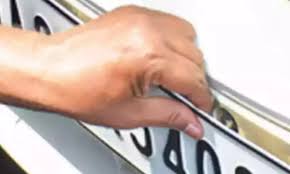 High Security Number Plates weren’t introduced to make life difficult. They came in because older plates were inconsistent and easy to misuse. Different sizes, creative fonts, removable screws, hand-painted letters—it was a system begging to be exploited. Stolen vehicles, cloned plates, hit-and-run cases that went nowhere. Standardization was inevitable.
HSRPs solve that by being boringly consistent. Same format across states. Laser-etched identification numbers. Chromium holograms. Non-reusable snap locks. Once fixed, they can’t be casually swapped or tampered with. It’s not flashy tech, but it works quietly in the background, which is often the best kind.
For vehicles registered before April 2019, upgrading is mandatory in most states now. The rollout wasn’t uniform, which is why confusion lingered for so long. Some regions enforced strictly, others barely mentioned it. But enforcement has tightened, and it’s no longer something you can count on slipping through unnoticed forever.
That’s usually when people pull out their phones and start searching, typing whatever phrase feels right in the moment. You’ll see searches like book my high security no plate ↗ , usually entered in a rush, maybe during a lunch break or while sitting in a parked car, just trying to figure out where to begin. It’s not about perfect wording—it’s about finding a legitimate way to get compliant without wasting time.
Here’s the part that surprises most people: the booking process itself is not that bad.
Through authorized portals, you enter your vehicle details—registration number, engine number, chassis number—choose a fitment center near you, pick a date and time, and pay online. No agents circling around. No bargaining. No “come back tomorrow” energy. You get a confirmation, show up, and the plates are installed.
On a good day, it takes less time than ordering coffee.
Of course, not every experience is perfect. Fitment centers can get crowded when deadlines approach. Websites sometimes slow down. Staff may look tired of answering the same questions all day. But compared to the old RTO process, this is refreshingly straightforward.
Once installed, something interesting happens. You stop thinking about it. Traffic checks feel quicker. There’s less explaining, less uncertainty. Your vehicle looks compliant because it is compliant. That quiet confidence is subtle, but it changes how you move through the city.
Along with the plate, you also get a color-coded windshield sticker—blue for petrol, orange for diesel, green for electric. It seems minor, almost decorative, but it feeds into toll systems, emissions monitoring, and long-term planning. It’s part of a larger transport ecosystem that works best when everyone plays their small part.
Cost is another area where rumors create unnecessary fear. Official HSRP prices vary slightly by vehicle type and state, but they’re generally reasonable. Roughly what you’d spend on a routine service or a small accessory. For something that lasts the life of the vehicle and keeps you on the right side of the law, it’s not an unreasonable expense.
What people worry about more than cost is legitimacy. With rising demand, fake or unofficial websites have appeared, and that makes people cautious. That’s why many users refine their searches and try phrases like book my high security number plate ↗ , hoping to land on something official and trustworthy. And that instinct is right—always double-check that you’re using a government-authorized portal for your state. A quick verification can save you a lot of stress later.
There’s also a psychological angle here that doesn’t get talked about enough. We tend to postpone tasks that don’t feel rewarding. A new number plate doesn’t make your car faster. It doesn’t improve mileage. It doesn’t feel exciting. But it removes friction. And removing friction from daily life adds up in ways you only notice after the fact.
Once the HSRP is installed, it becomes invisible. And that’s a sign of a system doing its job properly. Good infrastructure fades into the background. It doesn’t demand attention; it quietly supports everything else.
At a broader level, HSRP reflects how vehicle management in India is slowly changing. More standardization. More data-backed decisions. Less ambiguity at checkpoints. It’s not perfect, and there will always be gaps, but the direction is toward clarity rather than chaos.
Owning a vehicle has always meant accepting certain responsibilities, even if we don’t enjoy them. Insurance renewals. Pollution checks. License validity. Adding standardized number plates to that list isn’t thrilling, but it’s logical. And logic, even when boring, tends to make life smoother.
If you’ve been putting this off—telling yourself you’ll deal with it later—you’re not lazy or careless. You’re human. But taking care of it now, calmly and on your own terms, feels different. There’s no pressure, no last-minute rush.
In the end, a number plate is just a piece of metal. But the peace of mind it brings—especially on busy roads and unpredictable days—is very real. And sometimes, those small, unglamorous decisions are what make everyday driving feel a little lighter.